



The Complete Guide to Identifying Mid Century Modern Furniture

Have you ever wandered through a vintage shop in Melbourne and wondered whether that gorgeous timber sideboard is genuinely mid century modern? Or perhaps you've inherited furniture from your grandparents and you're curious about its true origins? What makes a piece authentically mid century modern, and how can you tell the difference between a valuable original and a clever reproduction?
Mid century modern furniture has captured the hearts of Australian homeowners for decades, and it's not hard to see why. The clean lines, organic shapes, and timeless appeal of these pieces blend beautifully with contemporary interiors while adding a touch of warmth and character. Whether you're a serious collector or simply someone who appreciates good design, understanding what makes this furniture style so distinctive is incredibly rewarding.
In this guide, we'll walk you through everything you need to know about identifying authentic mid century modern furniture Melbourne. From the defining characteristics and famous designers to spotting fakes and finding genuine pieces in Melbourne, you'll come away with the knowledge to make confident decisions. Plus, we'll share tips on caring for your treasured pieces and styling them in your home.
Key Characteristics of Authentic Mid Century Modern Furniture
Clean Lines and Organic Curves
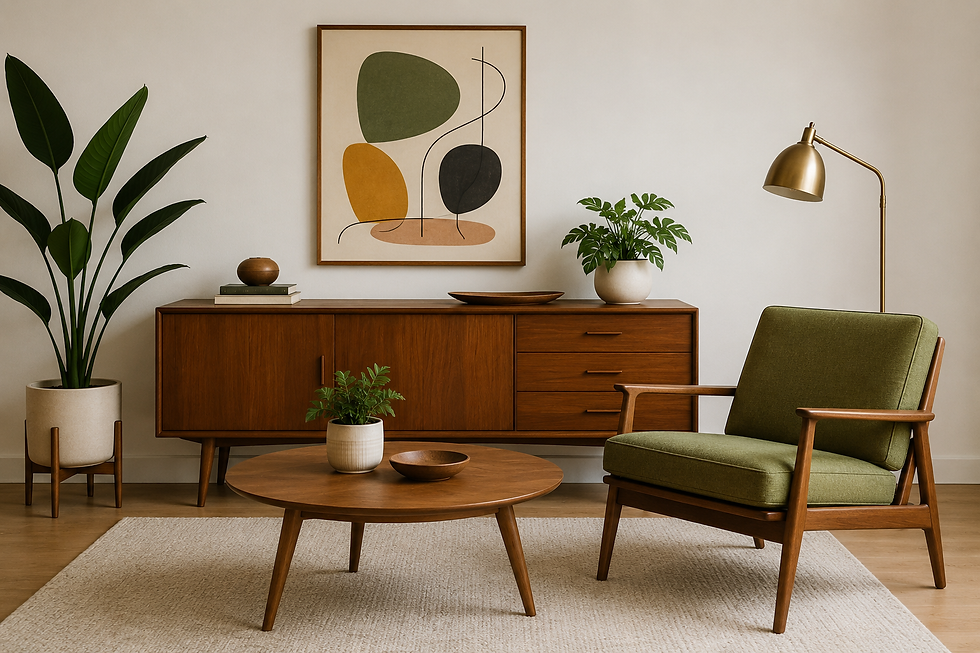
The first thing you'll notice about mid century modern furniture is its striking balance between straight lines and gentle curves. Designers of this era rejected the heavy ornamentation of earlier periods in favour of streamlined silhouettes. Think sleek dining tables with tapered legs, armchairs with sculptural backrests, and sideboards with smooth, uninterrupted surfaces.
Organic curves draw inspiration from nature, creating pieces that feel both sophisticated and approachable. You'll often spot kidney-shaped coffee tables, gently curved chair backs, and rounded edges that soften the overall aesthetic. This combination creates furniture that feels fresh even decades later.
Functional Minimalism and Natural Materials
Mid century modern designers believed furniture should serve a purpose without unnecessary fuss. Every element has a reason for being there. Storage pieces feature practical compartments, chairs prioritise comfort, and tables are sized for real-life use.
Natural materials take centre stage in authentic pieces. Timber—particularly teak, walnut, rosewood, and oak—was the material of choice. You'll also find leather, wool, and cotton upholstery, along with innovative materials like moulded plywood and fibreglass. The craftsmanship is typically excellent, with careful attention to grain patterns, joinery, and finishing.
Iconic Colour Palettes and Finishes
The colour palette of mid century modern furniture tends towards warm, earthy tones. Rich timber finishes in honey, amber, and deep brown dominate. When colour appears in upholstery or accents, expect mustard yellow, burnt orange, olive green, and teal blue. These hues complement the warm timber beautifully and remain popular in Australian homes today.
How Do I Know If My Furniture Is Mid Century Modern?
Examining Construction Techniques
Authentic mid century modern pieces showcase specific construction methods that set them apart. Look for dovetail joints in drawers—these interlocking pieces indicate quality craftsmanship. Mortise and tenon joints, where one piece slots into another, are common in chair and table legs.
Check underneath and behind the piece. Original furniture often shows hand-finished elements, slight irregularities, and natural wood grain visible even on hidden surfaces. Mass-produced reproductions typically have perfectly uniform finishes and may use staples or glue instead of traditional joinery.
Identifying Period-Appropriate Materials
The materials used can tell you a lot about a piece's authenticity. Genuine mid century furniture uses solid timber or quality veneers over plywood cores. Run your hand along the surface—original pieces have a depth and warmth that modern laminates simply can't replicate.
Examine the hardware carefully. Original drawer pulls, hinges, and handles from this period have a distinctive weight and design. They're often brass, chrome, or sculpted timber. Replacement hardware or cheap metal fittings suggest either restoration or reproduction.
Understanding Proportions and Scale
Mid century modern furniture has a particular sense of proportion. Pieces tend to sit lower to the ground than Victorian or Edwardian furniture. Legs are often tapered or splayed, creating a sense of lightness. Chairs have a relaxed recline, and sideboards are long and horizontal rather than tall and imposing.
If something feels "off" about the proportions—perhaps the legs seem too thick or the overall shape doesn't quite work—it may be a reproduction that hasn't captured the original design intent.

Famous Mid Century Modern Designers to Know
Danish Masters and American Influences
The Danish designers revolutionised furniture making during this era. Hans Wegner created over 500 chair designs, including the iconic Wishbone Chair. Arne Jacobsen gave us the Egg Chair and Swan Chair, while Finn Juhl pioneered sculptural forms that separated the seat from the frame.
American designers made equally significant contributions. Charles and Ray Eames experimented with moulded plywood and fibreglass, producing the legendary Eames Lounge Chair. Eero Saarinen designed the flowing Tulip Table and Womb Chair. Isamu Noguchi brought a sculptural, artistic sensibility to furniture design.
Australian Mid Century Designers Worth Discovering
Australia developed its own mid century modern movement, adapting international influences to local conditions. Designers like Grant Featherston created pieces specifically suited to Australian lifestyles. His iconic Contour Chair remains highly sought after by collectors.
Fred Ward, Clement Meadmore, and Gordon Andrews also contributed significantly to Australian design during this period. Their work offers collectors an opportunity to own unique pieces with genuine local heritage—often at more accessible prices than international icons.
What Is the Difference Between Mid Century and Mid Century Modern?
Understanding the Timeline
The term "mid century" simply refers to the middle of the twentieth century—roughly the 1940s through to the 1970s. "Mid century modern," however, describes a specific design movement that emerged during this period. It's characterised by the aesthetic principles we've discussed: clean lines, functional design, and natural materials.
Not everything made during this timeframe qualifies as mid century modern. Plenty of traditional, ornate, or mass-produced furniture was manufactured alongside the movement's iconic pieces. Understanding this distinction helps you identify genuine examples of the style.
Regional Variations and Australian Adaptations
Mid century modern developed differently around the world. Scandinavian design emphasised warmth and timber. American designers embraced new materials and manufacturing techniques. Italian design often incorporated bold colours and experimental forms.
Australian designers adapted these influences to suit local conditions. They worked with native timbers like blackwood and Queensland maple. They considered our climate, lifestyle, and available materials. This means Australian mid century modern furniture has its own distinct character worth appreciating.
Where to Find Mid Century Modern Furniture in Melbourne
Specialist Vintage Dealers and Showrooms
Melbourne boasts numerous specialist dealers focusing on mid century modern furniture. These showrooms offer curated collections, authentication expertise, and often restoration services. While prices may be higher than general antique shops, you're paying for knowledge and quality assurance.
Visiting dedicated dealers lets you examine pieces properly, ask questions, and learn from experts. Many dealers are happy to share their knowledge with genuine enthusiasts, even if you're not ready to purchase immediately.
Weekend Markets and Online Marketplaces
For bargain hunters, weekend markets and estate sales offer exciting opportunities. The Chapel Street Bazaar, Camberwell Sunday Market, and various garage sales throughout Melbourne's suburbs can yield fantastic finds. Arrive early, know what you're looking for, and inspect pieces carefully.
Online marketplaces like Facebook Marketplace, Gumtree, and eBay expand your hunting grounds significantly. Always request detailed photographs, ask about provenance, and arrange to inspect items in person before committing to purchases.
How to Spot Reproductions and Fakes
Common Signs of Modern Reproductions
Reproductions aren't necessarily bad—many offer excellent value for those wanting the aesthetic without the price tag. However, knowing the difference matters, especially if you're paying original prices.
Watch for overly perfect finishes, lightweight construction, and modern fasteners like Phillips head screws. Check labels and stamps carefully; some reproductions feature deliberately misleading markings. If a deal seems too good to be true, it probably is.
When Reproductions Make Sense
Quality reproductions have their place. They're often more practical for families with young children or pets. They're typically more affordable. And for certain iconic designs, licensed reproductions offer the only way to enjoy the aesthetic without spending tens of thousands of dollars.
Caring for Your Mid Century Modern Pieces
Proper care preserves both beauty and value. Dust timber surfaces regularly with a soft cloth. Apply quality furniture wax or oil every few months to maintain the finish. Keep pieces away from direct sunlight, which can fade and dry out timber.
For upholstery, professional cleaning every few years keeps fabric looking fresh. Address stains promptly using appropriate methods. If restoration becomes necessary, seek specialists experienced with mid century pieces—modern techniques can sometimes damage original finishes.
Conclusion
Identifying authentic mid century modern furniture combines knowledge, observation, and a genuine appreciation for quality design. From understanding the movement's origins to recognising construction techniques and famous designers, you're now equipped to explore this fascinating world with confidence.
Whether you're hunting through Melbourne's vintage shops or evaluating a family heirloom, remember that mid century modern furniture represents a pivotal moment in design history. These pieces were created by visionaries who believed beautiful, functional furniture should be accessible to everyone. That democratic spirit makes this movement particularly relevant today.
Take your time, trust your instincts, and don't be afraid to ask questions. The joy of mid century modern furniture lies not just in owning beautiful pieces, but in the stories they carry and the craftsmanship they represent. Happy hunting!



Comments