



Discover How Door Phone Intercoms Improve Health and Safety for Australian Seniors

Door phone intercom lets older Australians see and chat with visitors without opening the door, which cuts falls and keeps germs out. And we’ll cover health perks, safety bits, power choices, Aussie standards, plus tips for choosing the right unit for a Brisbane suburb house or an Adelaide nursing home. So, which one fits your door?
Why health and safety matter for seniors
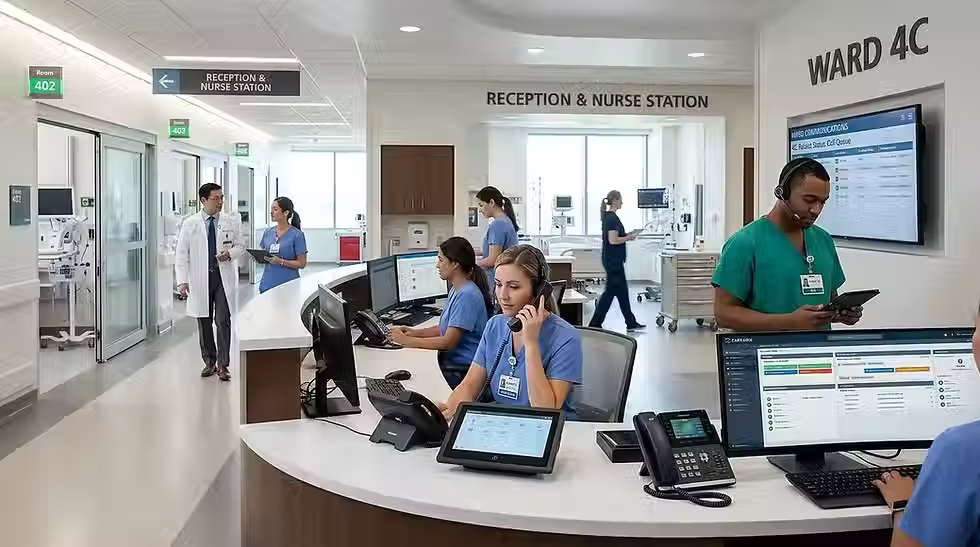
Older folks move slower, react a bit later, so a slip at the front door can get nasty fast. It's risky. In a care home staff have to answer every knock; the risk climbs. Could a quick glance stop a fall? And a door phone intercom lets residents check who’s outside before they pull the door open.
And it isn’t just safety. Skipping needless contact cuts bug spread, we all saw after the flu. So a video‑enabled door stays tidy, still letting friends and family in, and the door phone intercom saves you a trip to the front. What do you think?
Key features of a door phone intercom for aged‑care
But the unit flashes a crisp image, beams two‑way audio and triggers an alarm when it can’t ID the visitor. Want a model that pings you on any motion, silent or not, so you never miss a knock?
1080p video with night‑vision up to 10 m.
Two‑way audio with noise‑cancellation for windy days on the coast.
Push‑button emergency call to a nurse station.
Integration with smart‑home assistants like Alexa for voice‑activated unlocking.
From what I’ve seen in a Melbourne aged‑care centre, residents love the tactile “large‑print” buttons that give visual and haptic feedback, making the device usable for people with limited eyesight, and the door phone intercom integrates seamlessly with the centre’s existing nurse call system.
How a door phone intercom works
At the doorway sits a camera and mic, wired to a wall panel or your phone. And when someone taps the outside button, the signal races over a wire or Wi‑Fi straight to the indoor unit. Can you watch live video and talk back instantly, right now, right away, using the door phone intercom’s built‑in microphone?
Door phone intercom hardware overview
Most units sport a weather‑proof shell rated IP66+, so they shrug off salty Darwin breezes or Perth’s blistering sun. Power? You can feed it via PoE, a 12‑24 V transformer, solar panels or a rechargeable battery, even in the field.
And the indoor panel often has a backlit display, a speaker, and a button to get the door electronically. Some models let you set up multiple indoor panels for shared apartments in a high‑rise building.
Power options: PoE, hard‑wired, solar, battery
Choosing the right power option depends on the site’s infrastructure. PoE is popular in new builds because a single Ethernet cable supplies both data and power, reducing cable clutter.
And PoE? Just stretch a cable up to 30 m and you still pull 15 W out of each unit.
But a hard‑wired 12‑24 V line works fine, just add a dedicated transformer.
So a 10 W solar panel can keep a battery‑only unit humming through ten cloudy days.
Or go battery‑only? Usually eight hours on a full charge, does that cover your outage needs?
In a rural property near the Outback, a solar‑powered door phone intercom proved the most practical solution because extending mains power would cost thousands of kilometres of conduit.
Regulatory compliance and privacy in Australia
All installations must meet ‑1 for electrical safety and for wiring. Video recordings are subject to the Privacy Act 2026, meaning the footage can’t be stored longer than necessary without consent.
And if the system is linked to a cloud service, the provider must hold an Australian Privacy Principle (APP) certification. This makes sure that data is encrypted at rest and that users can delete recordings on request.
Network security and encryption
Modern door phone intercoms use end‑to‑end TLS encryption, which stops hackers from intercepting video streams. Firmware updates are signed digitally, so a compromised update won’t install malicious code.
AES‑256 encryption for video and audio.
Two‑factor authentication for app access.
Regular security patches every 90 days.
In a recent audit of a Sydney nursing home, the IT manager reported zero unauthorized access attempts after enabling these features.
Installation basics for homes and clinics
For a typical suburban home, you’ll need a 4‑mm conduit from the front door to the indoor panel, plus a low‑voltage power source. The conduit should be buried at least 600 mm deep to avoid accidental damage.
And Step 1: run conduit to outlet.
Step 2: mount the outdoor camera at 1.5 m, keep it level.
So Step 3: if you’re using PoE, plug the indoor panel into the same Ethernet switch so power and video share a cable, cutting extra wiring.
Step 4: test video, seal. Good?
For a clinic in Brisbane, the same steps apply, but you’ll also need to secure the system complies with the Australian Health Practitioner Regulation Agency (AHPRA) guidelines for patient privacy.
Scalability for strata and nursing homes
When you've dozens of units, bandwidth becomes a concern. A 1 Gbps Ethernet backbone can handle up to 50 simultaneous video streams at 1080p without noticeable latency.
And a central management console lets a building manager monitor all panels, push firmware updates, and set custom access codes for staff.
Integration with smart‑home ecosystems
Most new door phone intercoms talk to SmartThings, Home Assistant, or Google Home via an API. This means a resident can say “Hey Google, open the front door” after confirming the visitor on the screen.
In a recent trial in Adelaide, residents who used voice‑assistant integration reported a 30 % reduction in missed calls because the system announced visitors on their Echo Show devices.
Maintenance, warranty and total‑cost‑of‑ownership
Typical service intervals are once a year for cleaning the camera lens and checking the battery health. Most manufacturers offer a five‑year warranty on the outdoor unit and a three‑year warranty on the indoor panel.
Annual check: for a professional service in Perth.
Battery replacement: every 3‑4 years for battery‑only models.
Firmware updates: free for the first five years.
When you factor in the energy savings from a solar‑powered unit, the total‑cost‑of‑ownership over five years can be lower than a hard‑wired system that draws constant power.
Real‑world case studies from Sydney, Melbourne, Perth
In a Sydney high‑rise apartment block, the property manager installed a door phone intercom system with PoE and integrated it with the building’s existing security platform. Residents reported a 40 % drop in door‑related incidents within six months.
In a Melbourne aged‑care facility, the staff used the emergency call button on the indoor panel to alert nurses instantly. The average response time dropped from 3 minutes to under 30 seconds.
Future trends and AI‑driven visitor recognition
AI is starting to appear in door phone intercoms, offering facial‑recognition alerts that can differentiate between family members and strangers. But privacy advocates warn that storing facial data must comply with the Privacy Act and may require explicit consent.
And next‑gen models are being built with low‑power AI chips that can run locally, meaning the video never leaves the device unless the user chooses to share it.
Conclusion
A Door phone intercom Does more than just open a door, it cuts falls, keeps germs out, and lets staff know who’s at the knock. Pick the right power, meet Aussie standards, lock down the data, and you’re looking after people and privacy with the door phone intercom’s advanced management. A solid battery or wired link keeps it humming even when the grid flickers, and the encrypted video feed stops prank callers in their tracks. And what if you’re in Hobart’s suburbs or out near Broome? That same door phone intercom can actually boost everyday safety.


Comments